A shelf that suddenly needs a second shelf is not the real milestone. The real one arrives when you can see what your collection is becoming. Track record collection growth properly and patterns show up fast: duplicate eras, blind spots, dead weight, accidental themes, expensive habits, and the pressings you actually reach for when the room goes quiet.
For serious collectors, growth is not just volume. It is shape. A collection with 300 records can feel finished in all the wrong places, while a collection with 80 can still be wide open and alive. The difference is whether you are adding records with intention or just adding records because they crossed your path. If you want a collection that reflects your taste rather than your impulse control, you need a better way to measure growth.
What track record collection growth actually means
Most collectors begin with a simple metric: total items owned. That number matters, but only in the loosest possible sense. It tells you how much space you need. It does not tell you whether your collection is getting better.
Track record collection growth in a useful way and you start looking at density, balance, repetition, and use. How many records did you add this quarter versus how many did you actually play? Are you broadening your catalog across labels, countries, decades, and formats, or just stacking variants of the same ten artists? Has your median purchase price drifted up because your taste matured, or because your buying discipline disappeared?
This is where many collectors hit the limit of memory and spreadsheets. You can remember your grails. You cannot reliably remember every small pattern that formed over two years of buying, upgrading, logging plays, and chasing better copies.
Why raw count is the weakest growth metric
A bigger collection can mean a richer one. It can also mean a noisier one.
Collectors often confuse acquisition with progress because records are physical proof of movement. New arrivals feel like momentum. Yet growth without structure creates friction. You forget what you own. You buy duplicates. You stop exploring the back half of your shelves because discovery becomes manual labor.
Raw count also hides the trade-offs. If fifty new records enter the collection in six months, that sounds productive. But if forty of them remain unplayed, you did not really grow your listening life. You expanded inventory. Those are not the same thing.
A better approach treats collection growth as a mix of three things: acquisition, engagement, and quality. Acquisition is what came in. Engagement is what you actually played, revisited, and learned from. Quality is harder to quantify, but every collector knows it when they see it: better pressings, cleaner metadata, fewer unknowns, stronger condition notes, and a library that makes more sense each month than it did before.
The metrics worth tracking
The right numbers depend on how you collect. A soul 45 buyer, a Japanese jazz obsessive, and a broad catalog rock collector will not use the same lens. Still, a few metrics hold up across almost any collection.
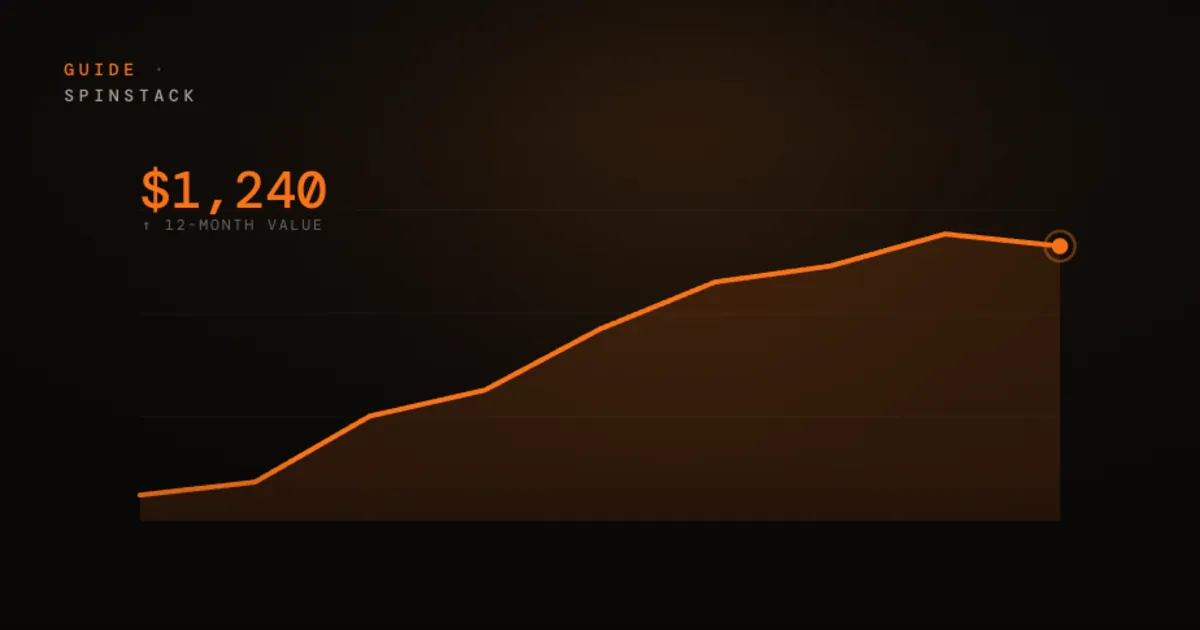
Collection value is useful, but only if you treat it carefully. It can show how replacement cost changes over time and which parts of the shelf carry real weight. It can also distort your judgment if you start buying for market movement instead of musical conviction.
Add rate matters more than most people think. If your intake climbs while your listening stays flat, backlog forms. Backlog changes the emotional texture of collecting. Instead of feeling like ownership, it starts to feel like admin.
Play frequency is one of the most honest signals in the room. A record that looked essential at checkout but never returns to the turntable is telling you something. So is a modest copy you keep pulling over and over again.
Artist, label, genre, and decade distribution help expose concentration. Concentration is not bad by itself. Most great collections have a point of view. The problem is unconscious concentration, when your shelves narrow without your permission.
Condition and pressing detail become more important as the collection matures. Early on, you are trying to build the library. Later, you are trying to understand exactly which version of that library you own.
How to build a system you will actually keep using
The best tracking system is not the most complex one. It is the one that survives contact with real life.
Start with the data you can maintain without resentment: title, artist, pressing details, purchase date, price paid, condition, and play history. If you buy in shops, at fairs, online, and while traveling, make capture friction as low as possible. Barcode scanning helps. Import helps more. Clean syncing matters even more than either because the value of analytics depends on data that stays current.
This is why dedicated collection software beats a generic notes app or spreadsheet once the library reaches any real size. A purpose-built system understands that a record is not just an item with a title. It has variants, condition, market movement, listening history, and a place in a wider collection story.
If you are already deep into Discogs, the ideal setup is not replacement. It is extension. You want your existing library to become more visible, more legible, and easier to live inside every day on the devices you actually use. Spinstack handles that particularly well because it treats the collection as something to examine and enjoy, not just store.
Track record collection growth without killing the ritual
There is a fair objection here. Some collectors hear the language of metrics and immediately picture vinyl reduced to dashboards. That concern is reasonable. The point is not to turn a living collection into a warehouse report.
Good tracking should protect the ritual, not flatten it. The more accurately your collection is organized, the less mental overhead sits between you and the record you want to hear. Better data shortens the distance between impulse and playback. It also makes the shelf itself more interesting because patterns become visible without requiring detective work.
Logging plays is a good example. Done badly, it feels clinical. Done well, it becomes a memory layer. You can see what carried a winter, what disappeared for a year, what became a Sunday record, and what never earned a second spin after the first week of ownership.
That kind of context changes buying too. Instead of asking, Do I want this record, you start asking, What role will this play in the collection I am actually building?
The signs your collection is growing in the right direction
Healthy growth feels more organized even when the total count rises. Retrieval gets easier. Duplicate buys drop. The relationship between what you own and what you play tightens. Your shelves start revealing taste with more precision.
You also begin to notice what is missing. That is a strong sign. A mature collection creates informed absence. You can see where a label run breaks, where a decade thins out, where one scene is overrepresented and another never arrived. Those gaps are useful because they give future buying shape.
Financial clarity improves as well. Not every collector wants to think in terms of value, but most prefer not to be surprised by it. Knowing what you paid, what has appreciated, and which records carry replacement risk helps with insurance, storage decisions, and simple peace of mind.
The final sign is emotional, not technical. A well-tracked collection becomes easier to trust. You know what is in it. You know why it is there. You know which parts still need work.
When growth slows down, that is not failure
Every collection reaches a phase where the easy expansion ends. You bought the obvious records. The remaining gaps are harder, more expensive, or more specific. This is usually where the collection starts getting better.
Slow growth often means your standards rose. You pass on filler. You wait for the right pressing. You stop confusing availability with necessity. Data helps here because it shows whether the slowdown reflects fatigue or refinement. Those are very different states.
If the collection feels stalled, revisit your own history. Look at what you played most over the last year, what categories quietly emerged, and what purchases never integrated into your listening. The answer is usually already in the shelf. You just need the collection surfaced clearly enough to read it.
A record collection should gain weight without becoming heavy. Track it well, and every addition has a chance to feel less like accumulation and more like authorship.
Spinstack is $9.99 once. There is a free 30-day trial with no credit card required. It runs on iPhone, iPad, Mac, and Apple TV.