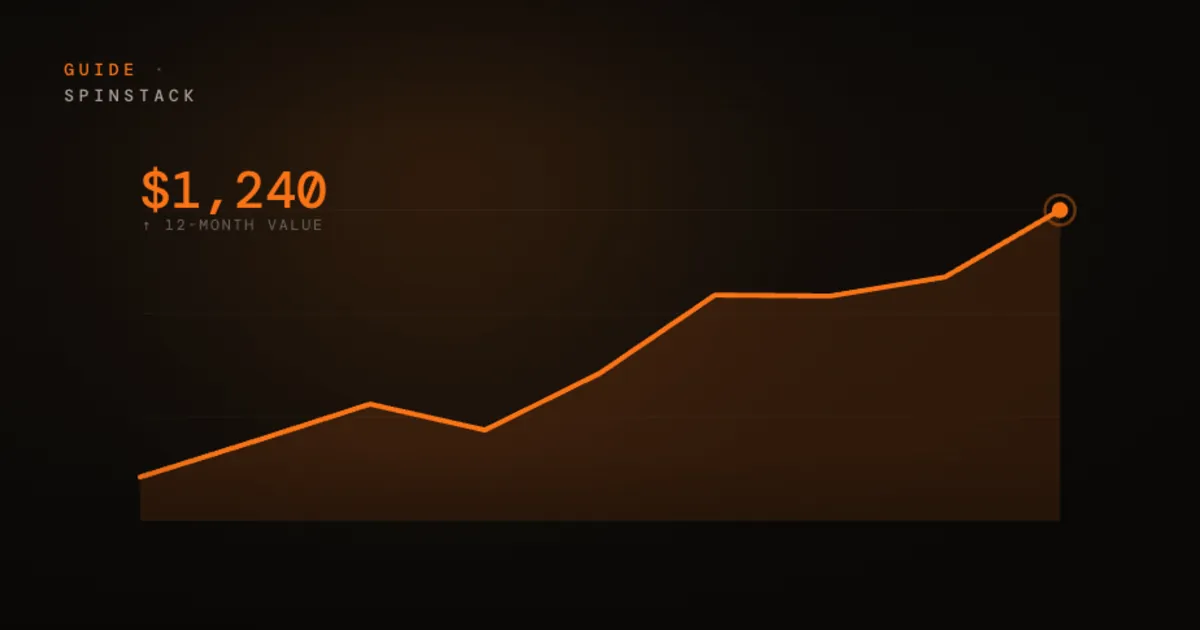
The number that matters is rarely the sticker on the sleeve. A clean first press can sit in your collection for years before the market catches up to what it is, while a hyped reissue can fall back to earth in six months. A good guide to record price tracking starts there: price is not a fact. It is a moving target shaped by condition, timing, demand, and how precisely you know what you own.
Most collectors do not need price tracking because they plan to sell tomorrow. They need it because value is part of understanding the collection itself. If you have spent years buying across shops, fairs, private sales, and late-night marketplace listings, you already know how quickly memory breaks down. What did you pay? What is the median now? Is that jump real, or just one inflated sale distorting the picture? Without tracking, your collection becomes visually organized and financially vague.
What record price tracking is actually for
At its best, record price tracking does three jobs at once. It gives you a current read on collection value, it helps you buy with more discipline, and it shows which parts of your shelves are changing in ways worth paying attention to.
That matters for more than bragging rights. Insurance is the obvious case, but not the only one. Price tracking also helps you decide when to upgrade a copy, when to hold off on an overpriced listing, and when a title you assumed was common has quietly become expensive. For serious Discogs users, this is less about speculation and more about removing guesswork.
There is a trade-off here. The more often you check prices, the easier it is to confuse movement with meaning. Small week-to-week shifts often do not matter. A real guide to record price tracking should make you calmer, not twitchier.
The data behind a guide to record price tracking
Record pricing is messy because records are messy. Two copies of the same release can differ dramatically in value based on condition, pressing details, inserts, hype stickers, and seller credibility. Any app or system that pretends otherwise is flattening the thing you care about most.
That is why release-level precision matters. Tracking a title is useful. Tracking the exact pressing in your collection is what makes the number credible. A 1977 original, a later repress, and a half-speed remaster might share artwork and songs, but they do not share a market.
Then there is condition. Market data is only as good as the context around it. Median sale prices can be helpful, but only if you understand what kind of copies are feeding that median. If your copy is near mint with original inners and a clean obi, broad averages can understate value. If your sleeve is rough and the vinyl plays with noise, averages can flatter it.
The point is not to chase perfect certainty. It is to build a price view that is specific enough to be useful.
How to track record prices without fooling yourself
The first rule is simple: separate collection value from wishful thinking. Use real market history, not asking prices. Anyone can list a common LP at a premium. That does not mean buyers agree.
The second rule is consistency. If you only check prices when you are about to buy or sell, you miss the broader pattern. Value becomes anecdotal. A better approach is to track your collection over time and let changes reveal themselves gradually. That lets you spot whether a jump is part of a longer trend or just a noisy week.
The third rule is context. A price increase on one release might reflect a genuine rise in demand. It might also reflect a seasonal bump, a small sample size, or a burst of attention around a catalog title. Without historical movement, a single number tells half the story.
This is where a collector-focused app earns its place. Not by shouting about value, but by showing it in relation to your actual library. If price tracking lives beside your collection data, your listening history, and your release details, you can read value as part of ownership rather than as a disconnected stat.
What to watch in your own collection
Not every record deserves the same level of attention. Start with the sections of your collection where pricing tends to move fastest or become most distorted.
First pressings with strong collector demand are obvious candidates. So are limited runs, region-specific editions, colored variants that were genuinely scarce, and releases with packaging elements that are often missing. Japanese pressings with intact obi strips, underground dance records with short original runs, and indie LPs that slipped out of print without warning all tend to reward better tracking.
Box sets are another category where sloppy data causes problems. Their value often depends on completeness, outer box condition, included booklets, and whether all discs match. A broad market number can be almost useless if your copy is missing a key element.
There is also a quiet category many collectors ignore: records you play constantly. Heavy rotation does not automatically mean heavy wear, but use changes condition risk over time. Tracking value alongside your listening habits can tell you which records might be worth upgrading before scarcity pushes replacement costs higher.
Common mistakes collectors make
The biggest mistake is tracking titles instead of versions. The second is assuming the highest recent sale proves current value. Exceptional sales happen. So do underpriced ones. Neither should become your whole model.
Another common mistake is updating collection values mentally instead of systematically. That works until the collection passes a few hundred records. After that, memory becomes fiction. You remember the expensive grails and forget the slow accumulation of mid-tier records that now add up to serious value.
Some collectors also overreact to short-term spikes. Reissues, anniversaries, artist deaths, archival releases, and rediscovery cycles can move prices fast. Sometimes the jump sticks. Sometimes it fades. Price tracking is useful because it gives those movements a timeline, not because it tells you to do anything dramatic with them.
The best setup is the one you will actually maintain
A spreadsheet can work. So can a notes app and too much patience. But most manual systems fail for the same reason: the labor compounds. Every new purchase needs entry, every upgrade needs correction, and every market shift requires active checking. Eventually the collection outgrows the system.
A better setup is one that treats price tracking as part of collection management, not as a separate chore. That means your release data is already structured, your pressings are identifiable, and price updates sit close to the rest of the library. For collectors in the Apple ecosystem, that is where a native tool like Spinstack makes sense. It keeps price tracking attached to the object that matters: the exact record on your shelf, not a vague line item in a document you stopped opening six months ago.
That difference is practical, but it is also psychological. When your collection looks good, feels organized, and reflects the level of care you bring to buying records in the first place, you are more likely to maintain it. Design is not decoration here. It is part of the habit.
A guide to record price tracking for buying better
Price tracking does not just help you value what you own. It improves how you buy next.
If you know a release has traded in a stable range for months, you can wait out a bad listing. If you see a title drifting upward across repeated sales, you can decide whether to move now or accept that delay has a cost. If your own collection data shows you already own three near-duplicate versions of the same album, price tracking can be the thing that stops a redundant purchase before it happens.
This is where collector intelligence beats impulse. You do not need constant alerts or dramatic charts. You need enough clarity to know when a price is fair, when it is inflated, and when the market is moving in a way that actually matters to your shelves.
What a healthy price-tracking habit looks like
Check your collection regularly, but not compulsively. Monthly is enough for most collectors. Spend more attention on records with real scarcity, higher replacement cost, or condition-sensitive packaging. Let the common stuff sit unless you notice a reason to revisit it.
When you add a record, identify the exact pressing immediately. When you upgrade a copy, update the condition. When you notice a meaningful price move, ask why before you react. The value is not in staring at numbers. The value is in building a collection you understand as clearly as you hear it.
A record shelf is not a stock chart. It is a history of your taste, your time, and your standards. Price tracking is useful when it sharpens that history instead of flattening it into a single dollar amount. Set it up well, trust the data enough to learn from it, and then go play the record.